
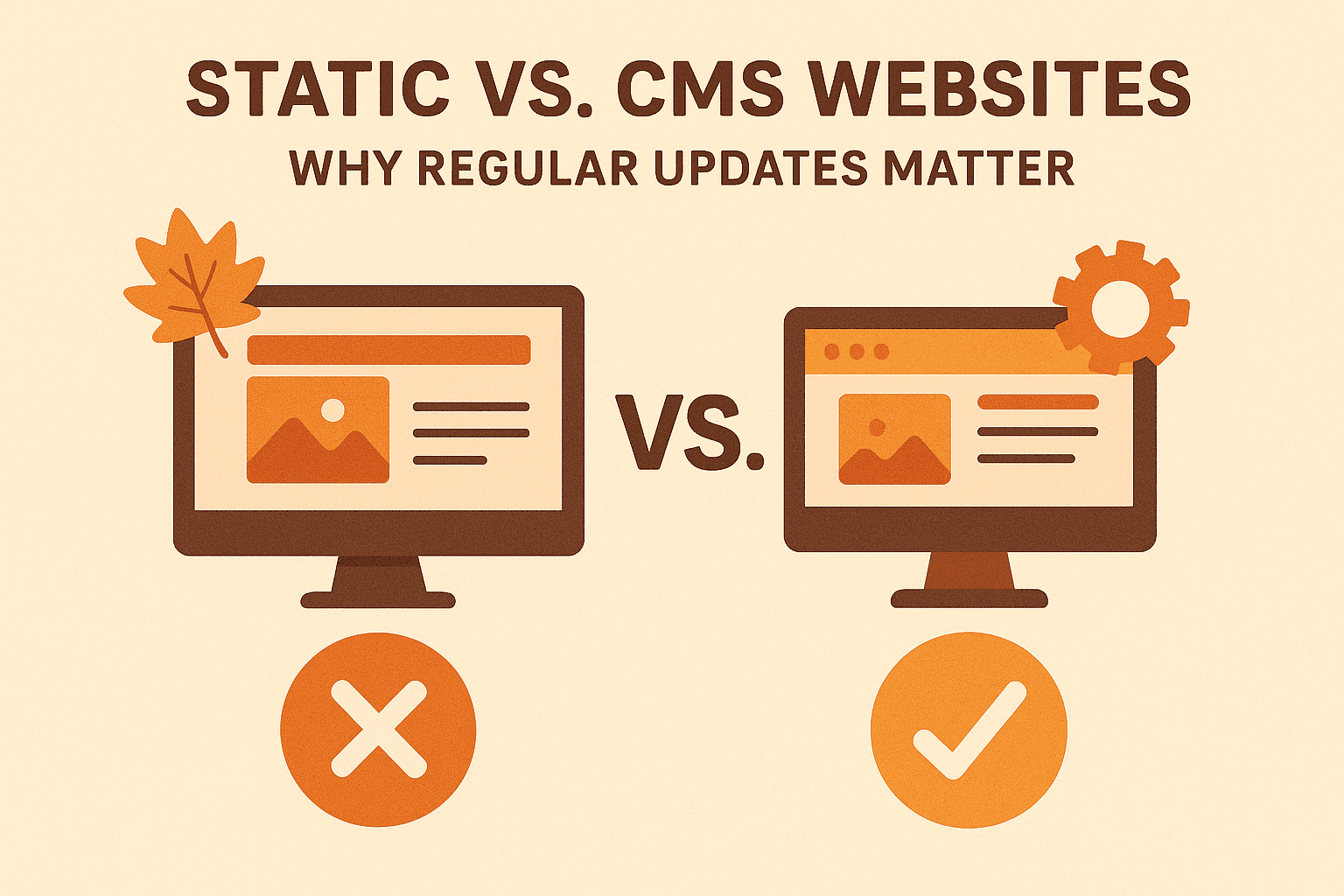

In today’s fast-moving digital world, having a website isn’t enough—you need one that stays fresh, relevant, and engaging. When planning your site, you’ll likely consider two main types: static websites and CMS (Content Management System) websites. Understanding their differences, and how updates fit into the picture, can help you make the right choice.
What is a Static Website?
A static website is made up of fixed web pages coded in HTML, CSS, and sometimes JavaScript. Each page is a separate file, and the content doesn’t change unless a developer manually updates it.
Pros of Static Websites:
- Fast and Reliable: Pages load quickly since there’s no database or server-side processing.
- Secure: Fewer moving parts mean fewer opportunities for hackers.
- Simple: Ideal for small sites with minimal content.
Cons of Static Websites:
- Difficult to Update: Making changes usually requires a developer, which can slow down updates.
- Risk of Staleness: If content isn’t refreshed regularly, your website can quickly feel outdated.
- Limited Features: Adding new functionalities, like blogs, e-commerce, or interactive tools, is complicated.
What is a CMS Website?
A CMS website stores content in a database and displays it dynamically. Popular platforms like WordPress, Joomla, and Drupal let you add or edit content without touching the code.
Pros of CMS Websites:
- Easily Updated: Fresh content, new pages, or blog posts can be added quickly.
- Dynamic Content: Supports blogs, e-commerce, forms, and interactive features.
- Scalable: Grow your website without rebuilding it from scratch.
- Extendable: Plugins and modules add advanced functionality with minimal effort.
Cons of CMS Websites:
- Maintenance Required: Core software, themes, and plugins need regular updates to stay secure.
- Potentially Slower: Database-driven pages can be slower than static sites without optimization.
- Security Risks: Popular platforms are frequent hacking targets if neglected.
Why Constant Updates Are Key
Regardless of whether your site is static or CMS-based, updating your website regularly is critical:
- Keep Visitors Engaged: Fresh content keeps people coming back.
- Boost SEO: Search engines favor websites that regularly update their content.
- Maintain Credibility: Stale websites make businesses look abandoned or unprofessional.
- Enhance Security: Regular updates reduce vulnerabilities, especially for CMS websites.
Choosing the Right Type for an Evolving Website
| Feature | Static Website | CMS Website |
| Ease of updating content | Low | High |
| Ability to keep content fresh | Hard | Easy |
| Page load speed | Very fast | Moderate |
| Security | Very secure | Needs regular updates |
| Ideal for | Small, simple sites | Blogs, e-commerce, dynamic content |
| Scalability | Limited | High |
Bottom Line:
- A static website works if your site is small and content rarely changes—but you’ll need a developer for updates, which can make it harder to keep content fresh.
- A CMS website is better if you want a site that evolves, grows, and regularly engages your audience. Regular updates keep your site relevant, secure, and optimized for search engines.
Your website should never stay the same. Whether static or CMS, websites that evolve with your business and audience needs are the ones that succeed online.